ENERVA™
EVNet™ Vehicle Management System
The brain and central nervous system of the vehicle. A decentralised, peer-to-peer control architecture built for heavy electric vehicles.
The System
15 years in the making
Wonder how ECVS has achieved such a diverse deployment history - from trucks and farm machines to trains and submarines? It is thanks to EVNet™, our proprietary vehicle control network.
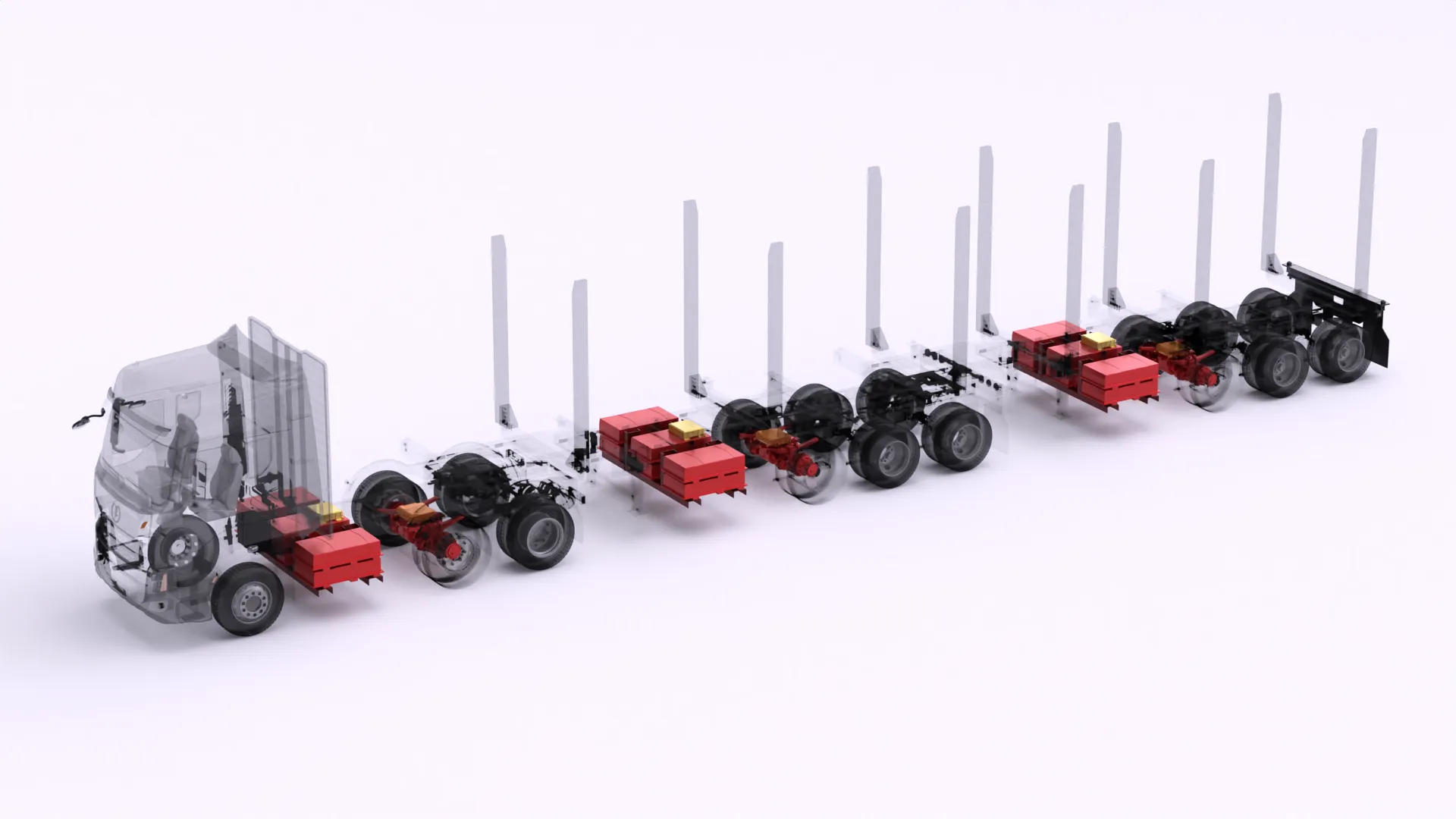
The control system is the heart of any modern electric vehicle. EVNet™ is a decentralised, peer-to-peer electric vehicle operating system that acts as both the brain and central nervous system. It reduces dependence on multiple component sub-systems, eliminating data friction and resource contention that plague traditional architectures.
Built on 15 years of experience with control system deployments on everything from mining equipment to marine vessels, EVNet™ combines the modern principles of domain and zone control into a unified, flexible system. The same hardware can be deployed anywhere on the vehicle, enabling full control functionality at any location.
Architecture
What makes EVNet™ different
Peer-to-peer nodes
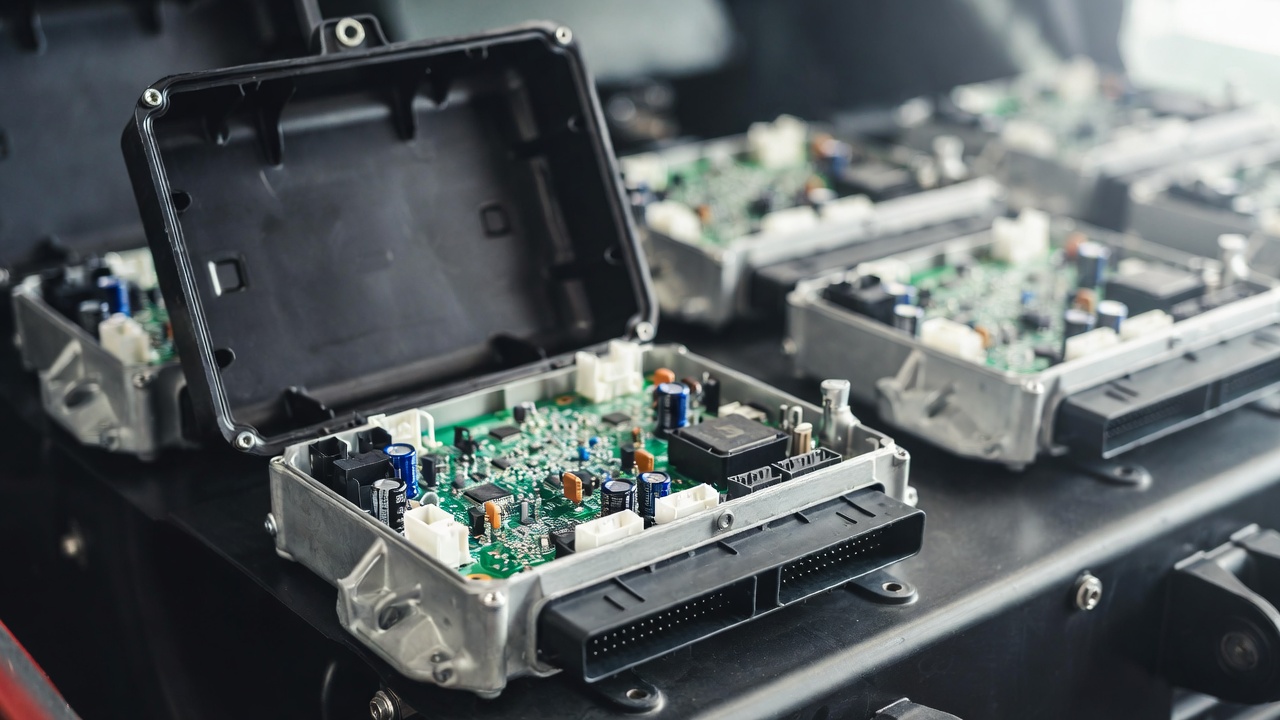
Every EVNet™ controller operates as an autonomous node. No centralised bottleneck, no single point of failure. Each node communicates directly with every other, delivering redundancy and resilience across the entire vehicle.
Proprietary ARM hardware
Purpose-built ARM-based controllers designed for the demands of heavy commercial vehicles. Runs on Linux or Android, with the processing power and I/O density needed for real-time vehicle control in harsh environments.
ASIL-D safety
The architecture supports ASIL-D, the highest level of automotive safety integrity. Safety-critical functions like braking, stability control, and power transmission are handled with the determinism and redundancy that heavy vehicles demand.
Rapid prototyping
The decentralised architecture allows extremely fast deployment of prototypes. New vehicle configurations can be stood up quickly using the same hardware in different positions, then consolidated into a single VCU for mass production.
Data-centric
EVNet™ is built around data from the ground up. As much or as little of the data generated is available to the operator in real time, via our cloud telematics service and secure API.
Simplified wiring
By placing computing power precisely where it is needed, EVNet™ dramatically reduces wiring harness complexity. Fewer cables, fewer connectors, fewer failure points - and lower cost.
The Hardware
Proprietary ARM controllers
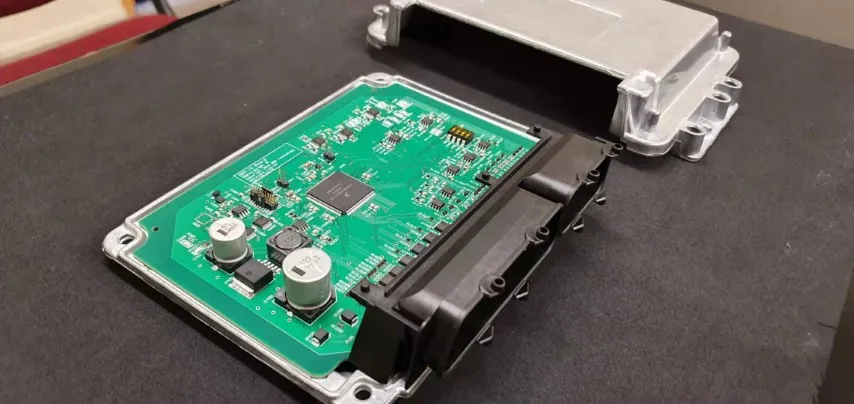
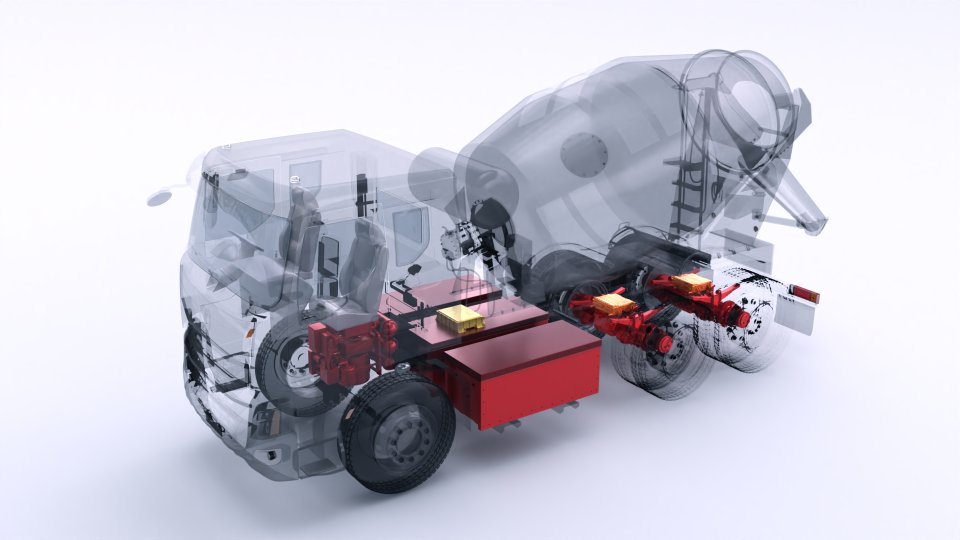
At the core of EVNet™ sits our proprietary ARM-based hardware - purpose-designed controllers that run peer-to-peer applications in a distributed network across the vehicle. Each unit is identical, compact, and ruggedised for the vibration, temperature, and electromagnetic environment of heavy commercial vehicles.
The same hardware deploys anywhere on the vehicle: cab, chassis, trailer, body equipment. This means a single hardware design covers every control function - from drivetrain management and battery monitoring to body equipment actuation and driver interface.
The result is a streamlined wiring harness, reduced cost and complexity, and the ability to position computing power precisely where it is needed for maximum reliability and performance.
Communication
Built on J1939 and CAN bus
EVNet™'s architecture is built on J1939, the industry-standard protocol for heavy-duty vehicle communication. J1939 sits atop the proven CAN bus foundation, delivering real-time determinism, electromagnetic resilience, and cost-effectiveness that vehicle systems demand.
CAN bus's priority-based message arbitration ensures safety-critical data - braking, stability, power transmission - arrives on time, every time. Its differential signalling naturally rejects electromagnetic interference from engines and high-voltage systems. This combination has made CAN/J1939 the backbone of trucks, construction equipment, and agricultural machinery worldwide.
J1939's peer-to-peer architecture enables our controllers to communicate as autonomous nodes without centralised bottlenecks. Standardised addressing, message formats, and diagnostic protocols allow seamless integration across the entire vehicle ecosystem and compatibility with components from multiple manufacturers.
Battery Management
Integrated BMS
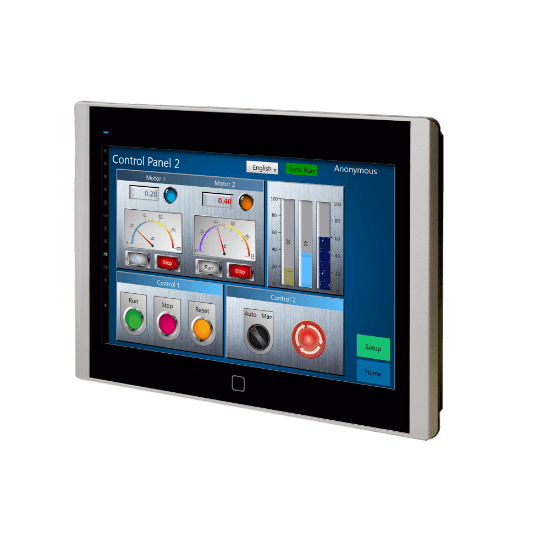
ECVS has also developed its own Battery Management System, fully integrated into the EVNet™ architecture. The BMS monitors every cell in the pack - voltage, temperature, current, and state of health - with the precision and response time that high-voltage commercial applications demand.
Because the BMS is native to EVNet™, battery data flows seamlessly into the broader vehicle control strategy and up to the cloud telematics platform. There are no translation layers, no third-party middleware, and no data gaps between the battery and the rest of the vehicle.
Cell balancing, thermal management, charge control, and safety cut-offs are all handled within the same peer-to-peer network that manages every other vehicle function.
Connected
Cloud-connected vehicle control
Combined with ECVS Telematics, EVNet™ enables over-the-air fault alerts and parameter changes on vehicles in the field. Software updates, diagnostics, and configuration changes can be pushed remotely - reducing downtime, simplifying fault-finding, and keeping every vehicle running the latest proven software.
OTA paramater updates
Push software updates and parameter changes to vehicles remotely. No workshop visit, no laptop cable, no downtime.
Remote diagnostics
Fault alerts are raised automatically and sent to the right people. Diagnose issues remotely before dispatching a technician, with full access to live and historical vehicle data.
Real-time data
Every data point generated by EVNet™ is available via secure API. Integrate with your fleet management system, ERP, or build custom dashboards - the data is yours.
For OEMs & Manufacturers
Simplify your EV transition
EVNet™ is not exclusive to ECVS vehicles. If you manufacture diesel equipment or machinery and are looking to electrify, EVNet™ provides a ready-made, proven control architecture that eliminates the need to design one from scratch.
Vehicle manufacturers can considerably reduce the cost of bringing new electric vehicle designs to market by eliminating the need to redesign expensive Vehicle Control Units for each iteration. Use EVNet™'s distributed nodes during development and testing, then consolidate into a single VCU for mass production cost savings.
By adopting a system built on J1939 and CAN bus industry standards, you leverage decades of automotive engineering expertise, ensure compatibility across multiple manufacturers' components, and future-proof your system against evolving requirements - all while keeping integration costs and complexity manageable.
What you get
- Proven control architecture with 15 years of deployment history
- ASIL-D safety capability for heavy vehicle applications
- Integrated BMS, telematics, and cloud connectivity
- J1939/CAN bus standard - compatible with existing components
- Fast prototyping with distributed nodes, consolidate to single VCU for production
- OTA paramater updates and remote diagnostics from day one
Ready to talk vehicle control?
Whether you are building an electric vehicle from the ground up or electrifying existing diesel equipment, EVNet™ gives you a proven, production-ready control system. Talk to us.
Get in touch